19th Century Literature Summative Entry

This semester I have really enjoyed studying 19th Century literature, and the changes and impacts of Romanticism and the Victorian Era. My blog entries this semester have really focused on how the literature of the 19th century has left a lasting legacy and is still evident in modern times.

Both my first two blog posts of this semester were critical blogs, which I think I find the most satisfying to write and deliberate, as opposed to creative. I really enjoyed looking at the work of William Wordsworth, and his relationship to nature and what it spoke of society, and still does. I found this part of the semester fascinating, and really think my first two blogs were my best this semester. The first, I looked at the “wise passiveness” that William Wordsworth writes about, and the second blog I discussed the impact of growing technology on our relationship with nature nowadays.

(First Blog)

(Second Blog)

The current state of the world during this COVID-19 pandemic is so unique, but really creates an interesting time to be studying the works of the Romantic Era, a time when the people realised the importance of a relationship with nature, as during this time that is becoming seemingly luxurious and desired by all. Thinking about the idea “Australia is not a finished product” seems more accurate than ever now, as we are in a time where society is going through perhaps more changes all at once than ever before. We as a country, society, and community, are learning to adapt, change, and thrive in this new environment, just showing how we are unfinished as a society and we will continue to evolve and take on new obstacles as a whole. Everything from our everyday social routines to our political systems have had to make changes and adaptations for this current state of the world, and as crazy and scary as this time has been, it is also thought-provoking to see how our whole world can basically shut down completely and turn to technology. This almost completely undermines the whole idea of my second blog, where I talked about a need for a break from technology and stronger relationship with nature. However, now we perhaps need it more than ever. And yet, people are now desperate to escape it and get back to the real world, to be allowed to go back to travelling the world and exploring beautiful new destinations. Maybe it’s now that we start to see the beauty and value in a relationship with our own backyard. Coming right out of our horrible bushfire season as well, we are seeing Australia change and finding beauty in the new beauty of rebirth and evolution as we rebuild. Australia is never finished, clearly, and we are seeing that now as both our land and our society are changing and problem solving a way to a new way of living.
Blog 4

To the esteemed Charles Dickens,

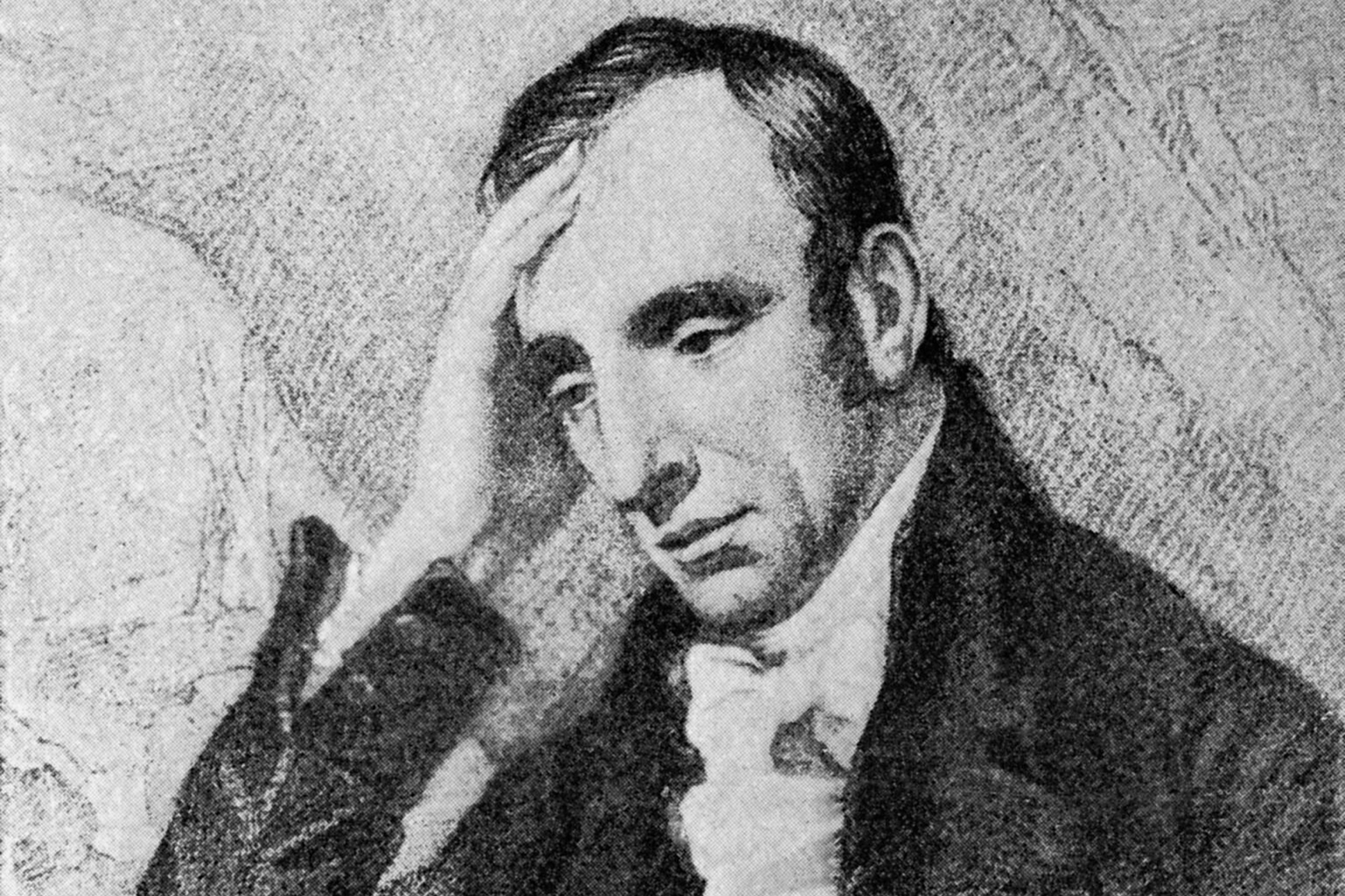
I am writing this letter to you in admiration for you and your work. Your work is critical to understanding the ways of the times during the Victorian Era. You gave great insight into social issues of the time that had possibly the greatest impact over the work of any other author. You brought political and public attention to the mistreatment of the poor and horrible poverty conditions of the time, from your own experiences of your childhood growing up. I cannot imagine what it must have been like to come from such poor conditions, but I admire how you used and grew from it, and your experiences made you so passionate in your fights, which urged more people to listen, and to make changes.

Our world could possibly not be what it is today, because of your ongoing legacy even almost 150 years after your time. Your novels Bleak House and Hard Times are some of the most influential pieces of literature that have impacted our political and society systems. Your stories Oliver Twist and A Christmas Carol have such interesting and compelling social commentary, but also live on as well-loved stories by children growing up, and families as a whole. Your legacy lives on in so many ways, and touches so many different branches of society and all sorts of people all over the world.

With admiration,

Lilly Flack

Blog 3

The year is 1887. I am a married woman with 3 children, raising them outside of London, Britain. My parents arranged our marriage when I was 19 years old, as my husband is from a financially stable family and wanted me to be well looked after, of course. My husband and I are definitely social people and have many friends in the community. We are a respectable couple and invited to many social gatherings as guests. My husband is a doctor and I raise two the children who are not yet school age, as the other attends classes during the day. I believe it’s important to be well educated however, and I take the time to tutor the small ones in basic reading. My oldest can already read the whole newspaper at only 7 years old! The children love when we read Alice’s Adventures in Wonderland together before bed. We attend our Christian Church service every Sunday and stay dedicated to our faith. This is also precious time we spend together as a family. My husband is at his practice so much, we don’t get to have as much time with the children as I would like. It is important that he be at the office though and continue to make the money we need to live our life as we wish. The things I value most right now are my family, faith, and ensuring we have a secure and stable life, that we are a respectable and honourable family.

Blog 2 – “The World Is Too Much with Us”

William Wordsworth composed the sonnet “The World Is Too Much with Us” in the early 1800’s, however it’s message still rings loud and true in today’s world. A common theme through much of Wordsworth’s work was the power he believed nature held and how, if people gave it their complete attention, nature could teach so much. “The World Is Too Much with Us” pushes this message again, and angrily begs for a different world that is more engrossed with nature.


William Wordsworth was notorious for being consistently vocal about the power of the natural world, and the material world can blur this. The line “Getting and spending, we lay waste our powers/little we see in nature that is ours” (2-3) shows the control and value people give to material items and money, instead of looking to nature for the wealth of knowledge and experiences it can give. This line is still powerfully true in our 21st century world, as people have become so object-orientated and give much more value to commodities and goods, instead of the beautiful nature that surrounds us every day for free.

For the most part, all people care about nowadays is the latest and greatest of whatever they can find, whether it be technology, shoes, or even furniture. People look less to nature for joy and look to superficial things, such as the number of likes on a photo or spending money, to feel fulfilled instead. This is so damaging to our society as we begin to decrease our time spent with the Earth and lose our touch with nature, that can be so rewarding in return. As we give more into the materialistic world, we take away from the natural as well, whether it be in time spent with the land or in the resources it gives us. We take and take, and there is no give back. We must give back and see how important nature is, and see all we can learn from it, before it becomes too late and there’s nothing left to take. We cannot create a new Earth out of shoes and mobile phones.

Peer Review 1

Peer Review for Anna Castagnella

Hi Anna, I really liked your poem ‘The Orange Mountains’ about the recent bushfires. The devastation to our land is really a big message from nature about our treatment towards the earth. I really appreciated that you added pictures as well that show the intensity of the fires and drastic impact. Despite you mentioning the sound of the birds and trees, the first image looks so peaceful, quiet and calm; whereas the second photo really resembles to screaming and anger you mention. It’s really powerful. I look forward to any other poems you write for blogs in the future too!

-Lilly 🙂

Blog 1 – “Wise Passiveness”

William Wordsworth was a great poet and important figure during the 19th century who, with Samuel Taylor Coleridge, founded the Romantic Age of the English literature. Along with joint publications, Wordsworth had many published poems of his own, in which he wrote a lot about the power of nature.

https://www.poetryfoundation.org/poets/william-wordsworth

In his poem titled ‘Expostulation and Reply’ (1798) Wordsworth wrote of a conversation between himself and a friend by the name of Matthew, in which his friend asks why he doesn’t look to books for research and knowledge but instead seems to “dream [his] time away” (4). Wordsworth’s reply to his friend is thoughtful and he speaks of the power in nature itself to teach one plenty. He suggests that those who can sit and bask in nature and find inspiration and knowledge through it can experience a “wise passiveness” (24).

I believe what Wordsworth implied by this is that sometimes there is more intellect in those that can sit quietly and not have to search for answers or meaning, as they will find answers come to them and nature can be the greatest teacher of all. Taking a step back and not pursuing something can actually help oneself to stimulate ideas on its own without force.

I feel that I have experienced this “wise passiveness” that Wordsworth talks about in my own life at times. When I have felt overwhelmed by life’s problems and can’t clear my mind, I always find that submerging myself in nature, like laying in the grass for hours, helps to inspire myself and think of solutions to the problems I’m facing. Nature has a way of helping the brain to be calm enough to be open to thoughts and that everyday life seems to cloud. This “wise passiveness” is somewhat intelligence that comes with allowing one’s self to be in tune with nature and forces beyond control which inspire new thought.

Australian Literature Summative Entry

Over time, Australia has grown and progressed over time and continues to do so. There are so many incredible Australian authors who have written about the advancement of the county, and artists whose artwork is captious to really see the changes over time. The quote “Australia is not a finished product” by Governor General David Hurley truly speaks to the development and advancement of our country that continues every day as the people of the country continue to make changes and betterments as a whole.

Through studying various Australian literary pieces and artworks over the semester, it is clear that the progression of the country has certainly been for the better in many ways. In my previous blog post (Blog Post 4), I analyzed the way Russell Drysdale’s 1953 painting titled ‘Shopping Day’ depicted the way Aboriginal people were forced into a very westernized society and were forced to leave their own culture behind them. Sadly, the change that this brought to the country was wrong and unjust, as we lost a lot of the culture and customs of the Native people who were first to live on the land. The Aboriginal people were central to the evolution of the country as a whole and it is heartbreaking that there was destruction at all to that. The Native Aboriginal people were forced by the White Colonists to live a very westernized lifestyle, including wearing very white society clothes. 

Australia continues to grow each day as we move past for these things in the past and progress past them, as we grow from our mistakes and try to mend the wrongs that have been done. The culture of Australia over time has grown to become more inclusive of our Aboriginal history and come to celebrate it as we should.

Acclaimed Australian author David Malouf has written distinguished novels that have talked about the development and overall changes to Australia as a country. His commemorative plaque in Circular Quay in Sydney reads the quote, “Australia is still revealing itself to us. We oughtn’t to close off possibilities by declaring too early what we have already become.” It is important to realize that as a son of immigrants on both parental sides himself, he is a significant part of the heritage of Australia, along with so many other people who have immigrated to the country and become a part of our rich civilization.

In another of my previous blog posts (Blog Post 5), I discussed the way Australia has an ever-growing and changing definition to what makes somebody an Australian. Our country has a history of immigrants from all over the world who have collectively built our culture and society to be unique to the country. We do have a rich history of people who have lived in our beautiful land for longer than any immigrants, however, there is still a great culture that has built over time because of the unique way people come together here and merge cultures. There is no limit to the product Australia could ever become with unceasing growth as people continue to come here and pursue a life that is politically, environmentally, and socially well-ahead of so many other countries, full of opportunities.

Blog Post 5 – Creative

The definition of who is an Australian is almost impossible. Over time, Australia has become a land of people from all over the world and from all different backgrounds and origins, who came to a new land to start over. Everyone’s background is different and is part of what makes Australia so special. There is a rich history of the Indigenous and Aboriginal people of Australia, who are the native people of our land before the English colonists settled here, bringing with them people from all over Europe over time. Their settlement in this country was just the beginning of immigrants from all different continents finding their way here and beginning a new life for themselves, and becoming part of the rich culture of Australia as it built over time. The country of Australia is always evolving and taking steps to stand out as one of the most forward-thinking countries in the world, as we excel at giving citizens what they need to live a great life.

My personal background is from Germany and English heritage line on my father’s side, and he was raised here in Australia. My mother was from America and moved here to raise her children after meeting my father, as they saw it a better fit for the life they wanted than America. Australia has a beautiful landscape that has become part of our nationality and is something we are very proud of. It is unique to any other country and is one of the reasons people come from all over to live here in the beautiful land.

Peer Review 4

Peer Review for Jared Marks

Hi Jared, I really enjoyed your letter to Meg in Down at the Dump. I thought it was an excellent piece as it felt very emotional and genuine. I really liked the tone and language you used throughout the letter, almost demanding but in a caring way to list off how she should live. I thought that you offered great advice to Meg and would have given her a really eyeopening insight to her relationship. I also really liked your “Shakespearean love” reference and how that went for Juliet in comparison to what could happen for Meg. I think if Meg really had received this letter in the mail, she would have found it very useful and powerful. If only characters existed for our insight in real life!

  • Lilly 🙂

Blog Post 4 – Critical

https://www.artgallery.nsw.gov.au/collection/works/523.1988/

Russell Drysdale – ‘Shopping day’ (1953)

During a visit to the Art Gallery of New South Wales, I found Russell Drysdale’s painting titled “Shopping Day” (1953) to be quite striking. The painting depicts an Aboriginal family of 4 standing in the middle of what seems to be a town square, an area that was likely built by the white colonists taking over their land at the time. It is clear the family is very out of place by the facial expressions and body language. They are wearing westernized clothes and look very serious and uncomfortable, with stiff body language, even the children. The family looks like even they were forced to stand there and act as though they were enjoying a shopping day out in the town, possibly as a point of propaganda to suggest they were enjoying the new life that the white people had forced upon them. 

This painting shows the way the native people of the land felt towards the new way of life they were forcibly made to live. I saw that the artist was very purposeful in the way the piece was painted, and it left the viewer to see a lot of commentary about the topic. The dark colour of the family’s skin stands out noticeably against the much lighter coloured, somewhat empty background, apart from the two buildings and statue. I thought this piece was interesting because of the way it can tell so much of a story and time period without using any words. It offers observations of the history of Australia during the time when the westernized world began to truly integrate itself into the world of our Native people. 

Design a site like this with WordPress.com
Get started